Buy zusatzeinkommen.eu ?
We are moving the project
zusatzeinkommen.eu .
Are you interested in purchasing the domain
zusatzeinkommen.eu ?
domain@kv-gmbh.de · 0541-91531010
Buy zusatzeinkommen.eu ?
Which elements are diatomic?
The elements that are diatomic in their natural state are hydrogen (H2), nitrogen (N2), oxygen (O2), fluorine (F2), chlorine (Cl2), bromine (Br2), and iodine (I2). These elements exist as diatomic molecules because they are more stable in pairs due to their electron configurations. When these elements are found in nature, they are typically bonded to another atom of the same element to form a diatomic molecule. **
Which elements are diatomic molecules?
The elements that exist as diatomic molecules in their natural state are hydrogen (H2), nitrogen (N2), oxygen (O2), fluorine (F2), chlorine (Cl2), bromine (Br2), and iodine (I2). These elements form stable diatomic molecules because they are more energetically favorable in pairs due to their electron configurations. When these elements are found in nature, they are typically bonded to another atom of the same element to form a diatomic molecule. **


Similar search terms for Diatomic
Top-Angebote
Products related to Diatomic:
-
Pan Macmillan Chris Guillebeau 2 Books Collection Set: The Happiness of Pursuit & Side Hustle - Paperback Non-Fiction - Purpose & Extra Income Guide BundleThis two-book bundle from bestselling author Chris Guillebeau pairs two of his most practical, motivating titles: The Happiness of Pursuit and Side Hustle. Together they explore how to design a more purposeful life and how to build genuine financial freedom, one manageable step at a time. The books are in brand new condition and are published by Pan Macmillan. Whether you're craving a bold personal quest or a smart way to earn extra income alongside your day job, this paperback set delivers inspiration backed by real research, real stories and real, actionable steps you can start today. The Happiness of Pursuit helps readers find genuine fulfillment by undertaking a quest that is meaningful to them, while Side Hustle provides guidance on building a side business and making extra money without quitting your day job.11,99 £*Shipping: 2,99 £Secure redirect to the provider
-
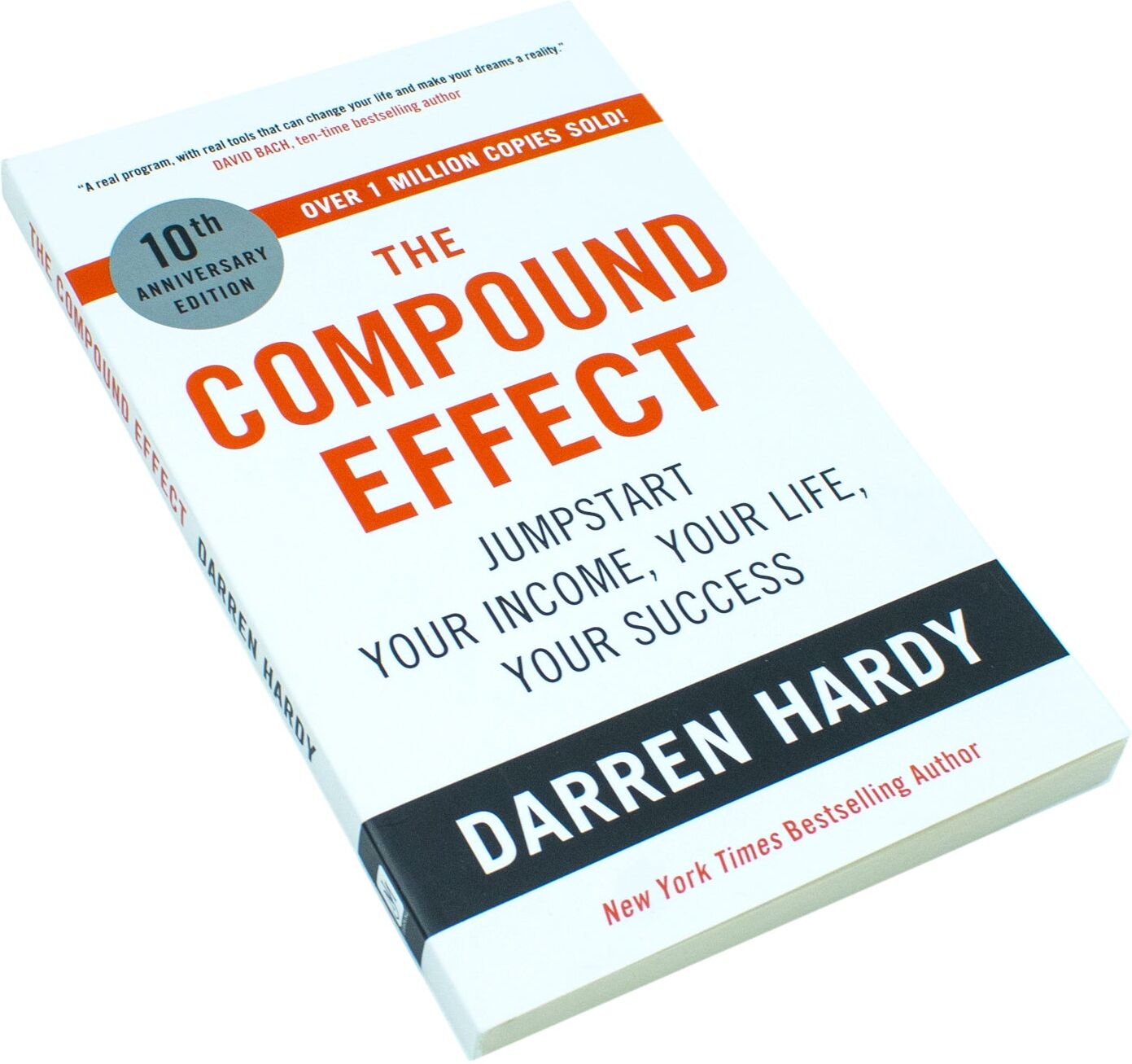
John Murray The Compound Effect: Jumpstart Your Income, Your Life, Your Success - the million copy bestseller revealing the secrets of superachievers by Darren HaNo gimmicks. No hyperbole. Finally, just the truth on what it takes to earn success As the central curator of the success media industry for over 25 years, author Darren Hardy has heard it all, seen it all, and tried most of it. This book reveals the core principles that drive success. The Compound Effect contains the essence of what every superachiever needs to know, practice, and master to obtain extraordinary success. Inside you will find strategies on: How to win--every time! The No. 1 strategy to achieve any goal and triumph over any competitor, even if they're smarter, more talented or more experienced.Eradicating your bad habits (some you might be unaware of!) that are derailing your progress.Painlessly installing the few key disciplines required for major breakthroughs.The real, lasting keys to motivation--how to get yourself to do things you don't feel like doing.Capturing the elusive, awesome force of momentum. Catch this, and you'll be unstoppable.The acceleration secrets of superachievers. Do they have an unfair advantage? Yes, they do, and now you can too! If you're serious about living an extraordinary life, use the power of The Compound Effect to create the success you desire. Begin your journey today!4,99 £*Shipping: 1,99 £Secure redirect to the provider

-
Which elements are diatomic in chemistry?
In chemistry, the diatomic elements are those that naturally exist as molecules composed of two atoms bonded together. These elements are hydrogen (H2), nitrogen (N2), oxygen (O2), fluorine (F2), chlorine (Cl2), bromine (Br2), and iodine (I2). These elements form diatomic molecules because they are more stable when bonded to another atom of the same element, and they are commonly found in this form in nature. **
-
When do you write atoms as diatomic?
Atoms are written as diatomic when they naturally form molecules with two atoms bonded together. For example, elements such as hydrogen (H2), nitrogen (N2), oxygen (O2), fluorine (F2), chlorine (Cl2), bromine (Br2), and iodine (I2) exist as diatomic molecules in their elemental form. This is because these elements are more stable when they are bonded to another atom of the same element, forming a diatomic molecule. **
-
Why does nitrogen only occur as a diatomic molecule?
Nitrogen only occurs as a diatomic molecule (N2) because it is a highly stable molecule due to the presence of a triple bond between the two nitrogen atoms. This triple bond is very strong and requires a significant amount of energy to break, making it difficult for nitrogen to exist as a single atom. Additionally, the diatomic form of nitrogen allows for a more efficient sharing of electrons between the two atoms, contributing to its stability. **
-
Do ions need to be balanced if they are diatomic?
Yes, ions still need to be balanced even if they are diatomic. Diatomic ions are composed of two atoms of the same element that are either positively or negatively charged. In a chemical formula, the total charge of the diatomic ion must still be balanced with the total charge of the other ions present in the compound. Therefore, the charges of diatomic ions must be balanced just like any other ions. **
How many degrees of freedom does a diatomic ideal gas have?
A diatomic ideal gas has 5 degrees of freedom. This includes 3 translational degrees of freedom (movement in x, y, and z directions) and 2 rotational degrees of freedom (rotation about two axes perpendicular to the molecular axis). The vibrational degrees of freedom are typically not considered for an ideal gas as they require quantized energy levels. **
Why does nitrogen belong to diatomic molecules, but arsenic does not?
Nitrogen belongs to diatomic molecules because it is more stable when it forms a covalent bond with another nitrogen atom, creating a nitrogen molecule (N2). This stability is due to the filling of the outer electron shell, which is energetically favorable. On the other hand, arsenic does not belong to diatomic molecules because it is more stable in its elemental form as a single atom, rather than forming a covalent bond with another arsenic atom. This is because arsenic has a larger atomic size and different electron configuration compared to nitrogen, leading to different bonding behavior. **
Top-Angebote
Products related to Diatomic:
-
25th Century Games RA: Traders Expansion for Board Game, Expands Play Experience with Trade and Development OpportunitiesRA: Traders Expansion adds a new tile type to the auction game RA, extending the play experience with new opportunities for trade and development. Use vessels on the Nile to move goods around the region, gather valuable treasures, and expand your dynasty. The expansion introduces additional decisions for players as they balance auctions, resources, and communication while seeking to strengthen their position among the gods. This expansion is designed for extending the base-game experience and requires the base game to play. It features trade and communication themes, making it a great addition to your RA collection.21,19 £*Shipping: 3,95 £Secure redirect to the provider
-
Rupa Publications The Ultimate Edge: How To Win Hearts, Minds And Opportunities by Dale Carnegie - Paperback Self-Help Book - NewDiscover the timeless wisdom of Dale Carnegie in this practical guide to building real relationships and seizing opportunities. The Ultimate Edge distils the author's core principles into a single, actionable companion for modern readers. Whether you're navigating a boardroom, a job interview, or a first date, this book provides the tools to communicate with warmth, confidence, and genuine influence. It's a refreshingly practical guide for anyone who wants to be memorable, likeable, and trusted. Written by Dale Carnegie, this book takes the core principles that made How to Win Friends and Influence People a global phenomenon and repackages them for today's fast-moving world. Across its chapters, readers are guided through the key concepts to help them connect with people and achieve success.2,99 £*Shipping: 2,99 £Secure redirect to the provider
-
Pan Macmillan Chris Guillebeau 2 Books Collection Set: The Happiness of Pursuit & Side Hustle - Paperback Non-Fiction - Purpose & Extra Income Guide BundleThis two-book bundle from bestselling author Chris Guillebeau pairs two of his most practical, motivating titles: The Happiness of Pursuit and Side Hustle. Together they explore how to design a more purposeful life and how to build genuine financial freedom, one manageable step at a time. The books are in brand new condition and are published by Pan Macmillan. Whether you're craving a bold personal quest or a smart way to earn extra income alongside your day job, this paperback set delivers inspiration backed by real research, real stories and real, actionable steps you can start today. The Happiness of Pursuit helps readers find genuine fulfillment by undertaking a quest that is meaningful to them, while Side Hustle provides guidance on building a side business and making extra money without quitting your day job.11,99 £*Shipping: 2,99 £Secure redirect to the provider
-
John Murray The Compound Effect: Jumpstart Your Income, Your Life, Your Success - the million copy bestseller revealing the secrets of superachievers by Darren HaNo gimmicks. No hyperbole. Finally, just the truth on what it takes to earn success As the central curator of the success media industry for over 25 years, author Darren Hardy has heard it all, seen it all, and tried most of it. This book reveals the core principles that drive success. The Compound Effect contains the essence of what every superachiever needs to know, practice, and master to obtain extraordinary success. Inside you will find strategies on: How to win--every time! The No. 1 strategy to achieve any goal and triumph over any competitor, even if they're smarter, more talented or more experienced.Eradicating your bad habits (some you might be unaware of!) that are derailing your progress.Painlessly installing the few key disciplines required for major breakthroughs.The real, lasting keys to motivation--how to get yourself to do things you don't feel like doing.Capturing the elusive, awesome force of momentum. Catch this, and you'll be unstoppable.The acceleration secrets of superachievers. Do they have an unfair advantage? Yes, they do, and now you can too! If you're serious about living an extraordinary life, use the power of The Compound Effect to create the success you desire. Begin your journey today!4,99 £*Shipping: 1,99 £Secure redirect to the provider
-
Which elements are diatomic?
The elements that are diatomic in their natural state are hydrogen (H2), nitrogen (N2), oxygen (O2), fluorine (F2), chlorine (Cl2), bromine (Br2), and iodine (I2). These elements exist as diatomic molecules because they are more stable in pairs due to their electron configurations. When these elements are found in nature, they are typically bonded to another atom of the same element to form a diatomic molecule. **
-
Which elements are diatomic molecules?
The elements that exist as diatomic molecules in their natural state are hydrogen (H2), nitrogen (N2), oxygen (O2), fluorine (F2), chlorine (Cl2), bromine (Br2), and iodine (I2). These elements form stable diatomic molecules because they are more energetically favorable in pairs due to their electron configurations. When these elements are found in nature, they are typically bonded to another atom of the same element to form a diatomic molecule. **
-
Which elements are diatomic in chemistry?
In chemistry, the diatomic elements are those that naturally exist as molecules composed of two atoms bonded together. These elements are hydrogen (H2), nitrogen (N2), oxygen (O2), fluorine (F2), chlorine (Cl2), bromine (Br2), and iodine (I2). These elements form diatomic molecules because they are more stable when bonded to another atom of the same element, and they are commonly found in this form in nature. **
-
When do you write atoms as diatomic?
Atoms are written as diatomic when they naturally form molecules with two atoms bonded together. For example, elements such as hydrogen (H2), nitrogen (N2), oxygen (O2), fluorine (F2), chlorine (Cl2), bromine (Br2), and iodine (I2) exist as diatomic molecules in their elemental form. This is because these elements are more stable when they are bonded to another atom of the same element, forming a diatomic molecule. **
Similar search terms for Diatomic
-
Why does nitrogen only occur as a diatomic molecule?
Nitrogen only occurs as a diatomic molecule (N2) because it is a highly stable molecule due to the presence of a triple bond between the two nitrogen atoms. This triple bond is very strong and requires a significant amount of energy to break, making it difficult for nitrogen to exist as a single atom. Additionally, the diatomic form of nitrogen allows for a more efficient sharing of electrons between the two atoms, contributing to its stability. **
-
Do ions need to be balanced if they are diatomic?
Yes, ions still need to be balanced even if they are diatomic. Diatomic ions are composed of two atoms of the same element that are either positively or negatively charged. In a chemical formula, the total charge of the diatomic ion must still be balanced with the total charge of the other ions present in the compound. Therefore, the charges of diatomic ions must be balanced just like any other ions. **
-
How many degrees of freedom does a diatomic ideal gas have?
A diatomic ideal gas has 5 degrees of freedom. This includes 3 translational degrees of freedom (movement in x, y, and z directions) and 2 rotational degrees of freedom (rotation about two axes perpendicular to the molecular axis). The vibrational degrees of freedom are typically not considered for an ideal gas as they require quantized energy levels. **
-
Why does nitrogen belong to diatomic molecules, but arsenic does not?
Nitrogen belongs to diatomic molecules because it is more stable when it forms a covalent bond with another nitrogen atom, creating a nitrogen molecule (N2). This stability is due to the filling of the outer electron shell, which is energetically favorable. On the other hand, arsenic does not belong to diatomic molecules because it is more stable in its elemental form as a single atom, rather than forming a covalent bond with another arsenic atom. This is because arsenic has a larger atomic size and different electron configuration compared to nitrogen, leading to different bonding behavior. **
* All prices are inclusive of VAT and, if applicable, plus shipping costs. The offer information is based on the details provided by the respective shop and is updated through automated processes. Real-time updates do not occur, so deviations can occur in individual cases. ** Note: Parts of this content were created by AI.