Buy zusatzeinkommen.eu ?
We are moving the project
zusatzeinkommen.eu .
Are you interested in purchasing the domain
zusatzeinkommen.eu ?
domain@kv-gmbh.de · 0541-91531010
Buy zusatzeinkommen.eu ?
What are conjunctional clauses, relative clauses, demonstrative clauses, and infinitive clauses?
Conjunctional clauses are dependent clauses that are introduced by a conjunction, such as "because," "although," or "while." They provide additional information about the main clause in a sentence. Relative clauses are also dependent clauses that provide more information about a noun in the main clause. They are introduced by relative pronouns like "who," "which," or "that." Demonstrative clauses are dependent clauses that function as adjectives and provide more information about a noun in the main clause. They are introduced by demonstrative pronouns like "this," "that," "these," or "those." Infinitive clauses are dependent clauses that are formed with an infinitive verb (to + base form of the verb). They can function as nouns, adjectives, or adverbs in a sentence. **
Are conjunctive clauses always adverbial clauses?
No, conjunctive clauses are not always adverbial clauses. While adverbial clauses are a type of conjunctive clause that function as adverbs to modify verbs, adjectives, or other adverbs, there are also other types of conjunctive clauses. For example, there are conjunctive clauses that function as noun clauses, such as in "I know that you are busy." In this sentence, "that you are busy" is a conjunctive clause functioning as a noun clause, not an adverbial clause. Therefore, conjunctive clauses can serve various grammatical functions beyond just adverbial clauses. **


Similar search terms for Clauses
Top-Angebote
Products related to Clauses:
-
25th Century Games RA: Traders Expansion for Board Game, Expands Play Experience with Trade and Development OpportunitiesRA: Traders Expansion adds a new tile type to the auction game RA, extending the play experience with new opportunities for trade and development. Use vessels on the Nile to move goods around the region, gather valuable treasures, and expand your dynasty. The expansion introduces additional decisions for players as they balance auctions, resources, and communication while seeking to strengthen their position among the gods. This expansion is designed for extending the base-game experience and requires the base game to play. It features trade and communication themes, making it a great addition to your RA collection.22,14 £*Shipping: 3,95 £Secure redirect to the provider
-
Rupa Publications The Ultimate Edge: How To Win Hearts, Minds And Opportunities by Dale Carnegie - Paperback Self-Help Book - NewDiscover the timeless wisdom of Dale Carnegie in this practical guide to building real relationships and seizing opportunities. The Ultimate Edge distils the author's core principles into a single, actionable companion for modern readers. Whether you're navigating a boardroom, a job interview, or a first date, this book provides the tools to communicate with warmth, confidence, and genuine influence. It's a refreshingly practical guide for anyone who wants to be memorable, likeable, and trusted. Written by Dale Carnegie, this book takes the core principles that made How to Win Friends and Influence People a global phenomenon and repackages them for today's fast-moving world. Across its chapters, readers are guided through the key concepts to help them connect with people and achieve success.2,99 £*Shipping: 2,99 £Secure redirect to the provider
-
Pan Macmillan Chris Guillebeau 2 Books Collection Set: The Happiness of Pursuit & Side Hustle - Paperback Non-Fiction - Purpose & Extra Income Guide BundleThis two-book bundle from bestselling author Chris Guillebeau pairs two of his most practical, motivating titles: The Happiness of Pursuit and Side Hustle. Together they explore how to design a more purposeful life and how to build genuine financial freedom, one manageable step at a time. The books are in brand new condition and are published by Pan Macmillan. Whether you're craving a bold personal quest or a smart way to earn extra income alongside your day job, this paperback set delivers inspiration backed by real research, real stories and real, actionable steps you can start today. The Happiness of Pursuit helps readers find genuine fulfillment by undertaking a quest that is meaningful to them, while Side Hustle provides guidance on building a side business and making extra money without quitting your day job.11,99 £*Shipping: 2,99 £Secure redirect to the provider
-
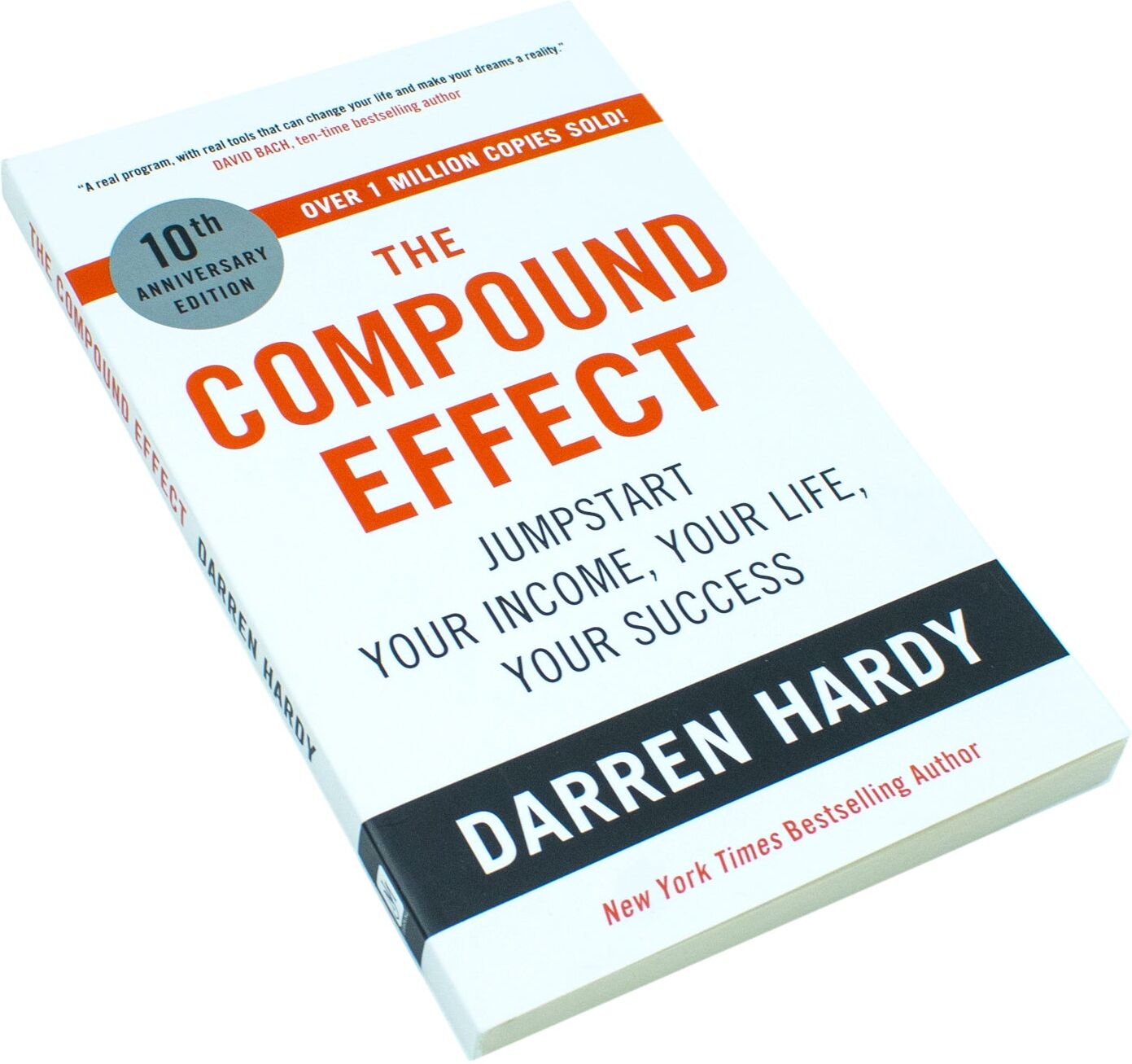
John Murray The Compound Effect: Jumpstart Your Income, Your Life, Your Success - the million copy bestseller revealing the secrets of superachievers by Darren HaNo gimmicks. No hyperbole. Finally, just the truth on what it takes to earn success As the central curator of the success media industry for over 25 years, author Darren Hardy has heard it all, seen it all, and tried most of it. This book reveals the core principles that drive success. The Compound Effect contains the essence of what every superachiever needs to know, practice, and master to obtain extraordinary success. Inside you will find strategies on: How to win--every time! The No. 1 strategy to achieve any goal and triumph over any competitor, even if they're smarter, more talented or more experienced.Eradicating your bad habits (some you might be unaware of!) that are derailing your progress.Painlessly installing the few key disciplines required for major breakthroughs.The real, lasting keys to motivation--how to get yourself to do things you don't feel like doing.Capturing the elusive, awesome force of momentum. Catch this, and you'll be unstoppable.The acceleration secrets of superachievers. Do they have an unfair advantage? Yes, they do, and now you can too! If you're serious about living an extraordinary life, use the power of The Compound Effect to create the success you desire. Begin your journey today!4,99 £*Shipping: 1,99 £Secure redirect to the provider


-
What are relative clauses and conjunctional clauses?
Relative clauses are clauses that provide additional information about a noun in the main clause. They are introduced by relative pronouns such as "who," "which," "that," and "whom." For example, in the sentence "The book that I read is very interesting," the relative clause "that I read" provides more information about the noun "book." Conjunctional clauses, on the other hand, are clauses that are connected to the main clause by conjunctions such as "and," "but," "or," "if," and "because." They can express relationships such as addition, contrast, alternative, condition, and cause. For example, in the sentence "I will go to the park if the weather is nice," the conjunctional clause "if the weather is nice" expresses a condition for the action in the main clause. **
-
What are the French conditional clauses (si-clauses)?
French conditional clauses, also known as si-clauses, are used to express a hypothetical situation and its potential outcome. They consist of two parts: the si clause (if clause), which describes the condition, and the main clause, which describes the potential result. The si clause is typically formed using the conjunction "si" followed by the imperfect tense or the pluperfect tense, while the main clause is formed using the conditional tense. These clauses are commonly used to talk about what would happen in certain situations if a specific condition were met. **
-
How do I transform subordinate clauses into main clauses?
To transform a subordinate clause into a main clause, you need to make sure that the clause can stand alone as a complete sentence. This means adding a subject and a verb to the clause if it doesn't already have them. You may also need to adjust the word order or add any necessary punctuation. Once these changes are made, the subordinate clause will become a main clause that can function independently within a sentence. **
-
How can main clauses and subordinate clauses be recognized?
Main clauses can be recognized by their ability to stand alone as complete sentences, containing a subject and a predicate. Subordinate clauses, on the other hand, cannot stand alone as complete sentences and are dependent on the main clause for their meaning. They often begin with subordinating conjunctions such as "because," "although," "while," or "if." Additionally, subordinate clauses often function as adverbial, adjectival, or nominal clauses, providing additional information about the main clause. **
How can subordinate clauses be rewritten as main clauses?
Subordinate clauses can be rewritten as main clauses by removing the subordinating conjunction and making any necessary adjustments to the verb tense or word order. For example, the subordinate clause "because she was tired" can be rewritten as the main clause "she was tired." This transformation allows the subordinate clause to stand alone as a complete sentence. Additionally, any pronouns or other words that were dependent on the subordinating conjunction may need to be adjusted to ensure the new main clause is grammatically correct. **
How can one recognize main clauses and subordinate clauses?
Main clauses can stand alone as complete sentences, while subordinate clauses cannot. Subordinate clauses often begin with subordinating conjunctions such as "although," "because," "if," "when," or "while." They also often contain a subject and a verb, but they do not express a complete thought on their own. Main clauses, on the other hand, express a complete thought and can function as independent sentences. By identifying these characteristics, one can recognize main and subordinate clauses in a sentence. **
Top-Angebote
Products related to Clauses:
-
Enesco/Dept 56 More Letters for the Clauses Clothtique Red , RedEvery year, Mr. and Mrs. Claus are eager to receive and read More Letters for the Clauses. The red mailbox has holiday accents including holly leaves, red berries, and a red bow; it is filled with wrapped packages and rolled-up letters. This happy...149,99 $*Shipping: 20,95 $Secure redirect to the provider
-
Enesco/Dept 56 More Letters for the Clauses African American Clothtique Red , RedEvery year, Mr. and Mrs. Claus are eager to receive and read More Letters for the Clauses. The red mailbox has holiday accents including holly leaves, red berries, and a red bow; it is filled with wrapped packages and rolled-up letters. This happy,...149,99 $*Shipping: 20,95 $Secure redirect to the provider
-
25th Century Games RA: Traders Expansion for Board Game, Expands Play Experience with Trade and Development OpportunitiesRA: Traders Expansion adds a new tile type to the auction game RA, extending the play experience with new opportunities for trade and development. Use vessels on the Nile to move goods around the region, gather valuable treasures, and expand your dynasty. The expansion introduces additional decisions for players as they balance auctions, resources, and communication while seeking to strengthen their position among the gods. This expansion is designed for extending the base-game experience and requires the base game to play. It features trade and communication themes, making it a great addition to your RA collection.22,14 £*Shipping: 3,95 £Secure redirect to the provider
-
Rupa Publications The Ultimate Edge: How To Win Hearts, Minds And Opportunities by Dale Carnegie - Paperback Self-Help Book - NewDiscover the timeless wisdom of Dale Carnegie in this practical guide to building real relationships and seizing opportunities. The Ultimate Edge distils the author's core principles into a single, actionable companion for modern readers. Whether you're navigating a boardroom, a job interview, or a first date, this book provides the tools to communicate with warmth, confidence, and genuine influence. It's a refreshingly practical guide for anyone who wants to be memorable, likeable, and trusted. Written by Dale Carnegie, this book takes the core principles that made How to Win Friends and Influence People a global phenomenon and repackages them for today's fast-moving world. Across its chapters, readers are guided through the key concepts to help them connect with people and achieve success.2,99 £*Shipping: 2,99 £Secure redirect to the provider
-
What are conjunctional clauses, relative clauses, demonstrative clauses, and infinitive clauses?
Conjunctional clauses are dependent clauses that are introduced by a conjunction, such as "because," "although," or "while." They provide additional information about the main clause in a sentence. Relative clauses are also dependent clauses that provide more information about a noun in the main clause. They are introduced by relative pronouns like "who," "which," or "that." Demonstrative clauses are dependent clauses that function as adjectives and provide more information about a noun in the main clause. They are introduced by demonstrative pronouns like "this," "that," "these," or "those." Infinitive clauses are dependent clauses that are formed with an infinitive verb (to + base form of the verb). They can function as nouns, adjectives, or adverbs in a sentence. **
-
Are conjunctive clauses always adverbial clauses?
No, conjunctive clauses are not always adverbial clauses. While adverbial clauses are a type of conjunctive clause that function as adverbs to modify verbs, adjectives, or other adverbs, there are also other types of conjunctive clauses. For example, there are conjunctive clauses that function as noun clauses, such as in "I know that you are busy." In this sentence, "that you are busy" is a conjunctive clause functioning as a noun clause, not an adverbial clause. Therefore, conjunctive clauses can serve various grammatical functions beyond just adverbial clauses. **
-
What are relative clauses and conjunctional clauses?
Relative clauses are clauses that provide additional information about a noun in the main clause. They are introduced by relative pronouns such as "who," "which," "that," and "whom." For example, in the sentence "The book that I read is very interesting," the relative clause "that I read" provides more information about the noun "book." Conjunctional clauses, on the other hand, are clauses that are connected to the main clause by conjunctions such as "and," "but," "or," "if," and "because." They can express relationships such as addition, contrast, alternative, condition, and cause. For example, in the sentence "I will go to the park if the weather is nice," the conjunctional clause "if the weather is nice" expresses a condition for the action in the main clause. **
-
What are the French conditional clauses (si-clauses)?
French conditional clauses, also known as si-clauses, are used to express a hypothetical situation and its potential outcome. They consist of two parts: the si clause (if clause), which describes the condition, and the main clause, which describes the potential result. The si clause is typically formed using the conjunction "si" followed by the imperfect tense or the pluperfect tense, while the main clause is formed using the conditional tense. These clauses are commonly used to talk about what would happen in certain situations if a specific condition were met. **
Similar search terms for Clauses
-
Pan Macmillan Chris Guillebeau 2 Books Collection Set: The Happiness of Pursuit & Side Hustle - Paperback Non-Fiction - Purpose & Extra Income Guide BundleThis two-book bundle from bestselling author Chris Guillebeau pairs two of his most practical, motivating titles: The Happiness of Pursuit and Side Hustle. Together they explore how to design a more purposeful life and how to build genuine financial freedom, one manageable step at a time. The books are in brand new condition and are published by Pan Macmillan. Whether you're craving a bold personal quest or a smart way to earn extra income alongside your day job, this paperback set delivers inspiration backed by real research, real stories and real, actionable steps you can start today. The Happiness of Pursuit helps readers find genuine fulfillment by undertaking a quest that is meaningful to them, while Side Hustle provides guidance on building a side business and making extra money without quitting your day job.11,99 £*Shipping: 2,99 £Secure redirect to the provider
-
John Murray The Compound Effect: Jumpstart Your Income, Your Life, Your Success - the million copy bestseller revealing the secrets of superachievers by Darren HaNo gimmicks. No hyperbole. Finally, just the truth on what it takes to earn success As the central curator of the success media industry for over 25 years, author Darren Hardy has heard it all, seen it all, and tried most of it. This book reveals the core principles that drive success. The Compound Effect contains the essence of what every superachiever needs to know, practice, and master to obtain extraordinary success. Inside you will find strategies on: How to win--every time! The No. 1 strategy to achieve any goal and triumph over any competitor, even if they're smarter, more talented or more experienced.Eradicating your bad habits (some you might be unaware of!) that are derailing your progress.Painlessly installing the few key disciplines required for major breakthroughs.The real, lasting keys to motivation--how to get yourself to do things you don't feel like doing.Capturing the elusive, awesome force of momentum. Catch this, and you'll be unstoppable.The acceleration secrets of superachievers. Do they have an unfair advantage? Yes, they do, and now you can too! If you're serious about living an extraordinary life, use the power of The Compound Effect to create the success you desire. Begin your journey today!4,99 £*Shipping: 1,99 £Secure redirect to the provider
-
How do I transform subordinate clauses into main clauses?
To transform a subordinate clause into a main clause, you need to make sure that the clause can stand alone as a complete sentence. This means adding a subject and a verb to the clause if it doesn't already have them. You may also need to adjust the word order or add any necessary punctuation. Once these changes are made, the subordinate clause will become a main clause that can function independently within a sentence. **
-
How can main clauses and subordinate clauses be recognized?
Main clauses can be recognized by their ability to stand alone as complete sentences, containing a subject and a predicate. Subordinate clauses, on the other hand, cannot stand alone as complete sentences and are dependent on the main clause for their meaning. They often begin with subordinating conjunctions such as "because," "although," "while," or "if." Additionally, subordinate clauses often function as adverbial, adjectival, or nominal clauses, providing additional information about the main clause. **
-
How can subordinate clauses be rewritten as main clauses?
Subordinate clauses can be rewritten as main clauses by removing the subordinating conjunction and making any necessary adjustments to the verb tense or word order. For example, the subordinate clause "because she was tired" can be rewritten as the main clause "she was tired." This transformation allows the subordinate clause to stand alone as a complete sentence. Additionally, any pronouns or other words that were dependent on the subordinating conjunction may need to be adjusted to ensure the new main clause is grammatically correct. **
-
How can one recognize main clauses and subordinate clauses?
Main clauses can stand alone as complete sentences, while subordinate clauses cannot. Subordinate clauses often begin with subordinating conjunctions such as "although," "because," "if," "when," or "while." They also often contain a subject and a verb, but they do not express a complete thought on their own. Main clauses, on the other hand, express a complete thought and can function as independent sentences. By identifying these characteristics, one can recognize main and subordinate clauses in a sentence. **
* All prices are inclusive of VAT and, if applicable, plus shipping costs. The offer information is based on the details provided by the respective shop and is updated through automated processes. Real-time updates do not occur, so deviations can occur in individual cases. ** Note: Parts of this content were created by AI.