Buy zusatzeinkommen.eu ?
We are moving the project
zusatzeinkommen.eu .
Are you interested in purchasing the domain
zusatzeinkommen.eu ?
domain@kv-gmbh.de · 0541-91531010
Buy zusatzeinkommen.eu ?
What are income statement accounts?
Income statement accounts are a category of accounts in a company's financial records that track revenues, expenses, gains, and losses over a specific period. These accounts provide a summary of the company's financial performance during that time frame, showing whether the company has generated a profit or incurred a loss. Examples of income statement accounts include sales revenue, cost of goods sold, operating expenses, interest income, and other income or expenses. **
What are asset and income statement accounts?
Asset and income statement accounts are two types of accounts used in accounting to track a company's financial transactions. Asset accounts represent the resources owned by the company, such as cash, inventory, and equipment. Income statement accounts, on the other hand, track the company's revenues, expenses, and net income over a specific period of time. These accounts are essential for understanding a company's financial position and performance. **

Similar search terms for Accounts
Top-Angebote
Products related to Accounts:
-
25th Century Games RA: Traders Expansion for Board Game, Expands Play Experience with Trade and Development OpportunitiesRA: Traders Expansion adds a new tile type to the auction game RA, extending the play experience with new opportunities for trade and development. Use vessels on the Nile to move goods around the region, gather valuable treasures, and expand your dynasty. The expansion introduces additional decisions for players as they balance auctions, resources, and communication while seeking to strengthen their position among the gods. This expansion is designed for extending the base-game experience and requires the base game to play. It features trade and communication themes, making it a great addition to your RA collection.22,14 £*Shipping: 3,95 £Secure redirect to the provider
-
Rupa Publications The Ultimate Edge: How To Win Hearts, Minds And Opportunities by Dale Carnegie - Paperback Self-Help Book - NewDiscover the timeless wisdom of Dale Carnegie in this practical guide to building real relationships and seizing opportunities. The Ultimate Edge distils the author's core principles into a single, actionable companion for modern readers. Whether you're navigating a boardroom, a job interview, or a first date, this book provides the tools to communicate with warmth, confidence, and genuine influence. It's a refreshingly practical guide for anyone who wants to be memorable, likeable, and trusted. Written by Dale Carnegie, this book takes the core principles that made How to Win Friends and Influence People a global phenomenon and repackages them for today's fast-moving world. Across its chapters, readers are guided through the key concepts to help them connect with people and achieve success.2,99 £*Shipping: 2,99 £Secure redirect to the provider
-
Pan Macmillan Chris Guillebeau 2 Books Collection Set: The Happiness of Pursuit & Side Hustle - Paperback Non-Fiction - Purpose & Extra Income Guide BundleThis two-book bundle from bestselling author Chris Guillebeau pairs two of his most practical, motivating titles: The Happiness of Pursuit and Side Hustle. Together they explore how to design a more purposeful life and how to build genuine financial freedom, one manageable step at a time. The books are in brand new condition and are published by Pan Macmillan. Whether you're craving a bold personal quest or a smart way to earn extra income alongside your day job, this paperback set delivers inspiration backed by real research, real stories and real, actionable steps you can start today. The Happiness of Pursuit helps readers find genuine fulfillment by undertaking a quest that is meaningful to them, while Side Hustle provides guidance on building a side business and making extra money without quitting your day job.11,99 £*Shipping: 2,99 £Secure redirect to the provider
-
John Murray The Compound Effect: Jumpstart Your Income, Your Life, Your Success - the million copy bestseller revealing the secrets of superachievers by Darren HaNo gimmicks. No hyperbole. Finally, just the truth on what it takes to earn success As the central curator of the success media industry for over 25 years, author Darren Hardy has heard it all, seen it all, and tried most of it. This book reveals the core principles that drive success. The Compound Effect contains the essence of what every superachiever needs to know, practice, and master to obtain extraordinary success. Inside you will find strategies on: How to win--every time! The No. 1 strategy to achieve any goal and triumph over any competitor, even if they're smarter, more talented or more experienced.Eradicating your bad habits (some you might be unaware of!) that are derailing your progress.Painlessly installing the few key disciplines required for major breakthroughs.The real, lasting keys to motivation--how to get yourself to do things you don't feel like doing.Capturing the elusive, awesome force of momentum. Catch this, and you'll be unstoppable.The acceleration secrets of superachievers. Do they have an unfair advantage? Yes, they do, and now you can too! If you're serious about living an extraordinary life, use the power of The Compound Effect to create the success you desire. Begin your journey today!4,99 £*Shipping: 1,99 £Secure redirect to the provider



-
When do you post to the income statement accounts and when to the balance sheet accounts?
Transactions that affect revenues and expenses are posted to the income statement accounts. These include items such as sales, operating expenses, and interest income. On the other hand, transactions that impact assets, liabilities, and equity are posted to the balance sheet accounts. Examples include cash, accounts receivable, accounts payable, and owner's equity. **
-
Are all expense accounts debit accounts?
No, not all expense accounts are debit accounts. Expense accounts can be either debit or credit accounts, depending on the accounting system being used. In a single-entry accounting system, expense accounts are typically debit accounts, while in a double-entry accounting system, expense accounts can be either debit or credit accounts depending on the nature of the expense. For example, in a double-entry system, some expenses like rent and utilities are recorded as debit expenses, while others like sales discounts and returns are recorded as credit expenses. **
-
When do you post to the income statement accounts and when do you post to the balance sheet accounts?
You post transactions to income statement accounts when recording revenues and expenses that relate to a specific accounting period, such as sales revenue or salaries expense. These accounts help determine the net income or loss for the period. On the other hand, you post transactions to balance sheet accounts when recording assets, liabilities, and equity, which represent the financial position of the company at a specific point in time. Balance sheet accounts include assets like cash and inventory, liabilities like accounts payable, and equity accounts like retained earnings. **
-
Are expense and revenue accounts always active accounts?
Expense and revenue accounts are considered temporary or nominal accounts, which means they are closed at the end of each accounting period to the retained earnings account. Therefore, they are not considered active accounts in the same way that asset, liability, and equity accounts are. Expense and revenue accounts are used to track the company's income and expenses over a specific period, and their balances are transferred to the income statement to calculate the net income or loss for that period. **
What are bank accounts and postal checking accounts?
Bank accounts are financial accounts held at a financial institution, such as a bank, that allow individuals to deposit and withdraw money, make payments, and earn interest on their deposits. These accounts typically come with a range of services, such as online banking and debit cards. Postal checking accounts, on the other hand, are similar to bank accounts but are offered by postal services or post offices. They provide similar services as bank accounts, allowing individuals to manage their money and make transactions. **
What are bank accounts and post-check accounts?
Bank accounts are financial accounts held by individuals or businesses at a financial institution, such as a bank, where money can be deposited, withdrawn, and managed. These accounts typically offer services such as debit cards, online banking, and the ability to earn interest on deposited funds. Post-check accounts are a type of bank account that allows the account holder to write checks against the account balance, which can be cashed or deposited by the recipient. These accounts are commonly used for making payments and managing finances. **
Top-Angebote
Products related to Accounts:
-
Perplexity PRO - 1 Year Subscription Key (ONLY FOR NEW ACCOUNTS)Perplexity Pro – 1-Year Subscription with Full Access to Advanced AI Features Release Date : March 2024 Developer / Publisher : Perplexity AI Inc. Perplexity Pro is the premium tier of Perplexity AI , a cutting-edge conversational search engine that blends natural language understanding with real-time web data. The 1-Year Activation Code unlocks a full year of advanced features tailored for researchers, professionals, students, and creators who want smarter, faster, and more contextual answers. Key Features of Perplexity Pro 600+ Pro Searches Daily – Ideal for deep research, academic work, and content creation. Access to Elite AI Models – Choose from GPT-4 Omni, Claude 3.5 Sonnet, Sonar Large, Deepseek R1, and more. Multimodal Capabilities – Generate images, analyze documents, and interact with visual data using tools like DALL·E and Stable Diffusion XL. Unlimited File Uploads – Upload and analyze PDFs, CSVs, images, and text files with AI-powered insights. Custom Knowledge Hubs – Create collaborative spaces for organizing research and files. $5 Monthly API Credits – Integrate Perplexity into your own apps or workflows. Enhanced Contextual Search – Ask follow-up questions and get refined answers with conversational intelligence. Exclusive Discord Access – Join a private community for expert tips, updates, and support. Activation Details Go to https://www.perplexity.ai/ and sign in or create a new account (must not have had a previous Pro subscription). Click on your profile icon and select Upgrade . Choose Annual Billing . Enter your activation code or promo code when prompted. Your account will update to: “Perplexity Pro – 12 months active.” SEO Benefits of Perplexity Pro AI-Powered Content Creation – Generate keyword-rich articles, summaries, and outlines. Trend Analysis – Use AI to identify emerging topics and optimize your content strategy. Research Efficiency – Perfect for bloggers, marketers, and students aiming to rank higher in search engines.101,48 £*Shipping: 0,00 £Secure redirect to the provider
-
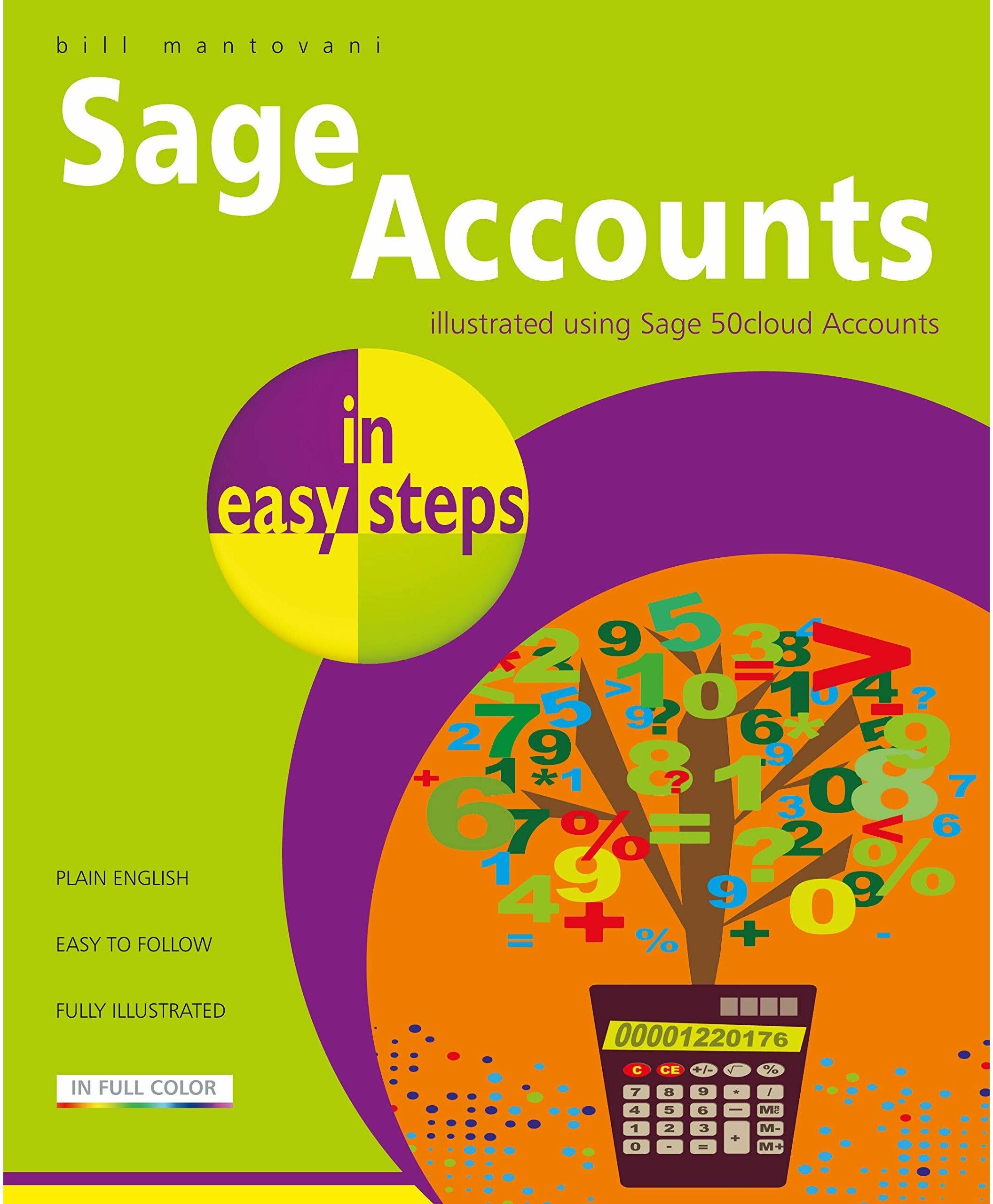
In Easy Steps Limited Sage Accounts in easy steps: illustrated using Sage 50cloud by Bill MantovaniSage Accounts is the UK's market-leading accounts software. It lets you manage your day-to-day finances, customers, suppliers and VAT and keeps your finger on the pulse of your business. Sage Accounts in easy steps uses detailed images and easy-to-follow instructions, showing you how to quickly get to grips with the new features of this leading accounts software. This definitive guide clarifies everything from basic recording keeping to utilising Sage as an information-bank for making crucial business decisions. Areas covered include: Setting up Sage, entering debtors and creditors Producing purchase/sales orders and invoices Bank account reconciliation Stock management, including Bill of Materials Important month and year end procedures Processing the VAT return and e-Submission Generating invaluable management reports Sage Accounts in easy steps is ideal for non-accountants using Sage for the first time, or just needing to grasp the new key features all in easy steps! Illustrated using Sage 50cloud Table of Contents Getting Started The Customer Ledger The Supplier Ledger The Nominal Ledger The Bank Products Invoices Processing Sales Orders Purchase Orders Financial Reporting Fixed Assets The Report Designer Opening Balances Data Management Task Management5,95 £*Shipping: 2,99 £Secure redirect to the provider
-
25th Century Games RA: Traders Expansion for Board Game, Expands Play Experience with Trade and Development OpportunitiesRA: Traders Expansion adds a new tile type to the auction game RA, extending the play experience with new opportunities for trade and development. Use vessels on the Nile to move goods around the region, gather valuable treasures, and expand your dynasty. The expansion introduces additional decisions for players as they balance auctions, resources, and communication while seeking to strengthen their position among the gods. This expansion is designed for extending the base-game experience and requires the base game to play. It features trade and communication themes, making it a great addition to your RA collection.22,14 £*Shipping: 3,95 £Secure redirect to the provider
-
Rupa Publications The Ultimate Edge: How To Win Hearts, Minds And Opportunities by Dale Carnegie - Paperback Self-Help Book - NewDiscover the timeless wisdom of Dale Carnegie in this practical guide to building real relationships and seizing opportunities. The Ultimate Edge distils the author's core principles into a single, actionable companion for modern readers. Whether you're navigating a boardroom, a job interview, or a first date, this book provides the tools to communicate with warmth, confidence, and genuine influence. It's a refreshingly practical guide for anyone who wants to be memorable, likeable, and trusted. Written by Dale Carnegie, this book takes the core principles that made How to Win Friends and Influence People a global phenomenon and repackages them for today's fast-moving world. Across its chapters, readers are guided through the key concepts to help them connect with people and achieve success.2,99 £*Shipping: 2,99 £Secure redirect to the provider
-
What are income statement accounts?
Income statement accounts are a category of accounts in a company's financial records that track revenues, expenses, gains, and losses over a specific period. These accounts provide a summary of the company's financial performance during that time frame, showing whether the company has generated a profit or incurred a loss. Examples of income statement accounts include sales revenue, cost of goods sold, operating expenses, interest income, and other income or expenses. **
-
What are asset and income statement accounts?
Asset and income statement accounts are two types of accounts used in accounting to track a company's financial transactions. Asset accounts represent the resources owned by the company, such as cash, inventory, and equipment. Income statement accounts, on the other hand, track the company's revenues, expenses, and net income over a specific period of time. These accounts are essential for understanding a company's financial position and performance. **
-
When do you post to the income statement accounts and when to the balance sheet accounts?
Transactions that affect revenues and expenses are posted to the income statement accounts. These include items such as sales, operating expenses, and interest income. On the other hand, transactions that impact assets, liabilities, and equity are posted to the balance sheet accounts. Examples include cash, accounts receivable, accounts payable, and owner's equity. **
-
Are all expense accounts debit accounts?
No, not all expense accounts are debit accounts. Expense accounts can be either debit or credit accounts, depending on the accounting system being used. In a single-entry accounting system, expense accounts are typically debit accounts, while in a double-entry accounting system, expense accounts can be either debit or credit accounts depending on the nature of the expense. For example, in a double-entry system, some expenses like rent and utilities are recorded as debit expenses, while others like sales discounts and returns are recorded as credit expenses. **
Similar search terms for Accounts
-
Pan Macmillan Chris Guillebeau 2 Books Collection Set: The Happiness of Pursuit & Side Hustle - Paperback Non-Fiction - Purpose & Extra Income Guide BundleThis two-book bundle from bestselling author Chris Guillebeau pairs two of his most practical, motivating titles: The Happiness of Pursuit and Side Hustle. Together they explore how to design a more purposeful life and how to build genuine financial freedom, one manageable step at a time. The books are in brand new condition and are published by Pan Macmillan. Whether you're craving a bold personal quest or a smart way to earn extra income alongside your day job, this paperback set delivers inspiration backed by real research, real stories and real, actionable steps you can start today. The Happiness of Pursuit helps readers find genuine fulfillment by undertaking a quest that is meaningful to them, while Side Hustle provides guidance on building a side business and making extra money without quitting your day job.11,99 £*Shipping: 2,99 £Secure redirect to the provider
-
John Murray The Compound Effect: Jumpstart Your Income, Your Life, Your Success - the million copy bestseller revealing the secrets of superachievers by Darren HaNo gimmicks. No hyperbole. Finally, just the truth on what it takes to earn success As the central curator of the success media industry for over 25 years, author Darren Hardy has heard it all, seen it all, and tried most of it. This book reveals the core principles that drive success. The Compound Effect contains the essence of what every superachiever needs to know, practice, and master to obtain extraordinary success. Inside you will find strategies on: How to win--every time! The No. 1 strategy to achieve any goal and triumph over any competitor, even if they're smarter, more talented or more experienced.Eradicating your bad habits (some you might be unaware of!) that are derailing your progress.Painlessly installing the few key disciplines required for major breakthroughs.The real, lasting keys to motivation--how to get yourself to do things you don't feel like doing.Capturing the elusive, awesome force of momentum. Catch this, and you'll be unstoppable.The acceleration secrets of superachievers. Do they have an unfair advantage? Yes, they do, and now you can too! If you're serious about living an extraordinary life, use the power of The Compound Effect to create the success you desire. Begin your journey today!4,99 £*Shipping: 1,99 £Secure redirect to the provider
-
When do you post to the income statement accounts and when do you post to the balance sheet accounts?
You post transactions to income statement accounts when recording revenues and expenses that relate to a specific accounting period, such as sales revenue or salaries expense. These accounts help determine the net income or loss for the period. On the other hand, you post transactions to balance sheet accounts when recording assets, liabilities, and equity, which represent the financial position of the company at a specific point in time. Balance sheet accounts include assets like cash and inventory, liabilities like accounts payable, and equity accounts like retained earnings. **
-
Are expense and revenue accounts always active accounts?
Expense and revenue accounts are considered temporary or nominal accounts, which means they are closed at the end of each accounting period to the retained earnings account. Therefore, they are not considered active accounts in the same way that asset, liability, and equity accounts are. Expense and revenue accounts are used to track the company's income and expenses over a specific period, and their balances are transferred to the income statement to calculate the net income or loss for that period. **
-
What are bank accounts and postal checking accounts?
Bank accounts are financial accounts held at a financial institution, such as a bank, that allow individuals to deposit and withdraw money, make payments, and earn interest on their deposits. These accounts typically come with a range of services, such as online banking and debit cards. Postal checking accounts, on the other hand, are similar to bank accounts but are offered by postal services or post offices. They provide similar services as bank accounts, allowing individuals to manage their money and make transactions. **
-
What are bank accounts and post-check accounts?
Bank accounts are financial accounts held by individuals or businesses at a financial institution, such as a bank, where money can be deposited, withdrawn, and managed. These accounts typically offer services such as debit cards, online banking, and the ability to earn interest on deposited funds. Post-check accounts are a type of bank account that allows the account holder to write checks against the account balance, which can be cashed or deposited by the recipient. These accounts are commonly used for making payments and managing finances. **
* All prices are inclusive of VAT and, if applicable, plus shipping costs. The offer information is based on the details provided by the respective shop and is updated through automated processes. Real-time updates do not occur, so deviations can occur in individual cases. ** Note: Parts of this content were created by AI.